Most hard decisions are made in the same chair as the email. We sit with a difficult call for weeks, turning it over between meetings, getting nowhere. Then, on a walk with no particular purpose, it loosens. Nothing new has been learned. Something has simply let go.
It is tempting to call that luck. It is closer to physiology — and remarkably easy to use on purpose.
Walking opens the question
In 2014, Marily Oppezzo and Daniel Schwartz at Stanford ran a series of experiments on walking and creative thinking. People generated ideas while sitting and while walking — some on a treadmill facing a blank wall, some outdoors — and the difference was not subtle.
The treadmill result is the telling one. There was nothing to look at. The movement itself did the work.
Two further details matter to anyone with a decision to make. The boost lingered: people who sat down after walking stayed more creative for a while. And walking helped far more with generating options than with converging on a single right answer. It widens the field. It does not pick the winner.
Walk to open the question. Sit down to close it.
Nature quietens the loop
Rumination is the loop your brain runs when a decision will not resolve: the same arguments, in the same order, arriving at the same impasse. It feels like thinking. It is closer to circling.
In 2015, Gregory Bratman and colleagues, also at Stanford, sent participants on a 90-minute walk — either through green, open parkland or alongside a busy multi-lane road. Afterwards, the people who had walked in nature reported less rumination, and brain scans showed reduced activity in the subgenual prefrontal cortex, a region linked to that kind of repetitive, self-focused thought. The people who had walked beside the traffic showed no such change.
Same length of walk. The difference was where it happened. Attention restoration theory, developed by the environmental psychologists Rachel and Stephen Kaplan, offers one explanation: cities spend attention; nature restores it. A street asks you to watch the traffic. A ridge path asks almost nothing of you at all.
The point, then, is not exercise. It is distance — giving your mind enough room from the problem that it stops gripping so hard.
Now look at where your hardest decisions are currently made: seated, between other meetings, with a phone face-up on the table. That is the opposite of what helped in both studies — moving, and somewhere green. The cheapest improvement available to most executives is not a new framework. It is taking the one decision that matters this week outside, on foot — and only sitting down once it is time to choose.
How it shows up in the week
Movement is the second of our three levers — breathe, move, connect — and it follows the breath for a reason. Once the body has stopped bracing, it can be asked to move in a way that slows thinking rather than speeding it up.
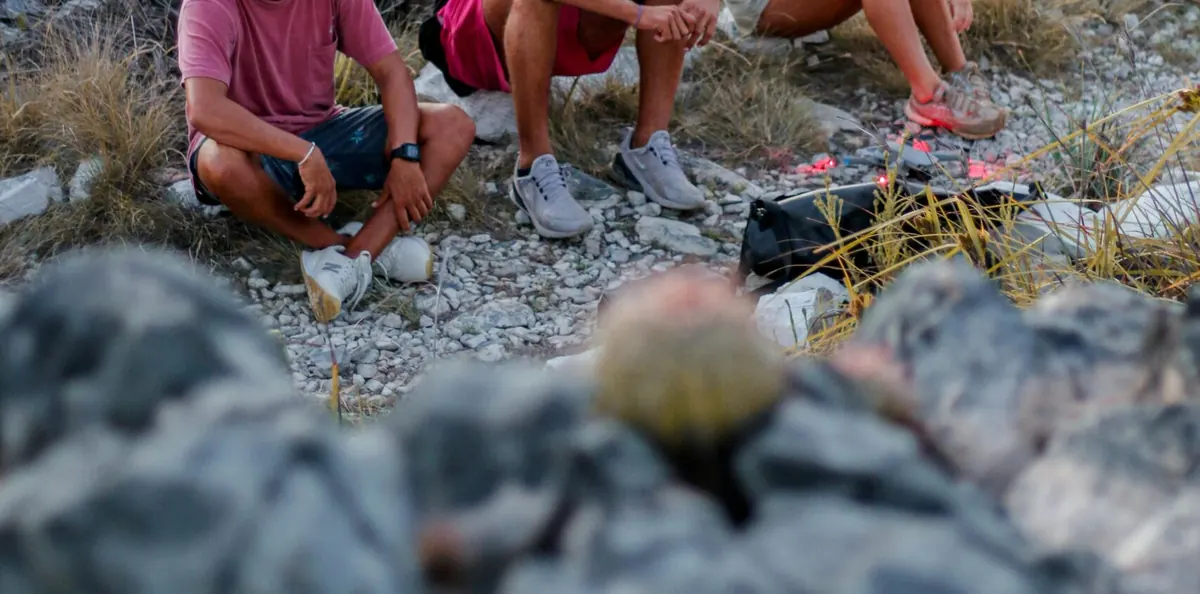
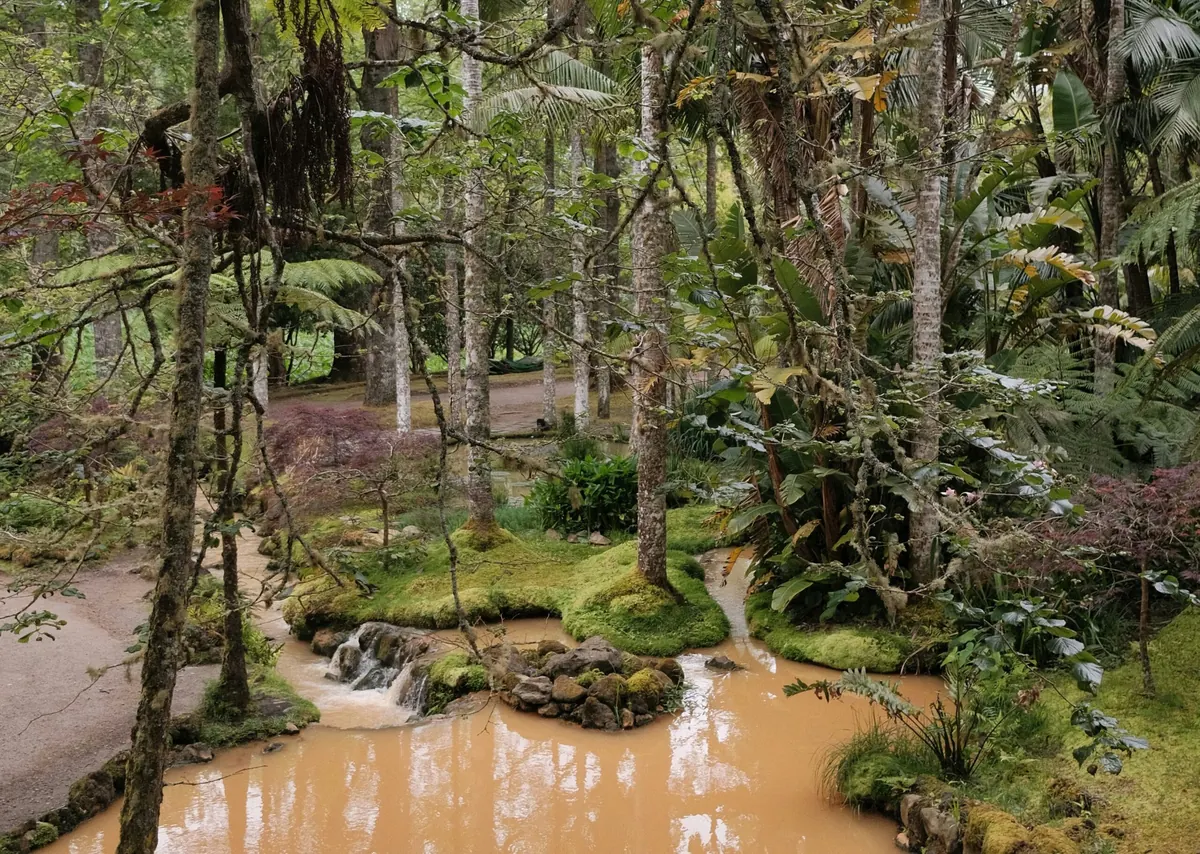
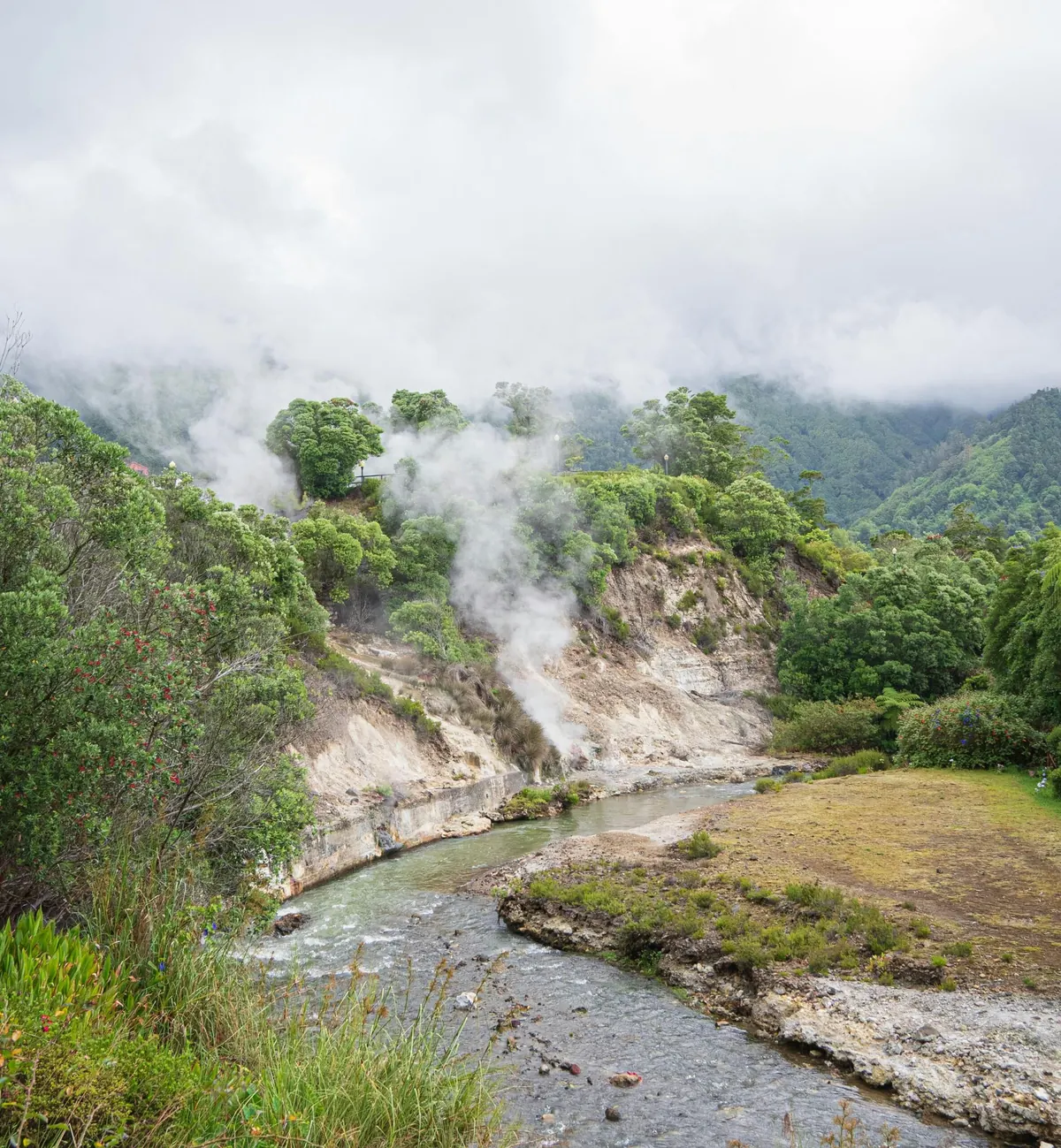
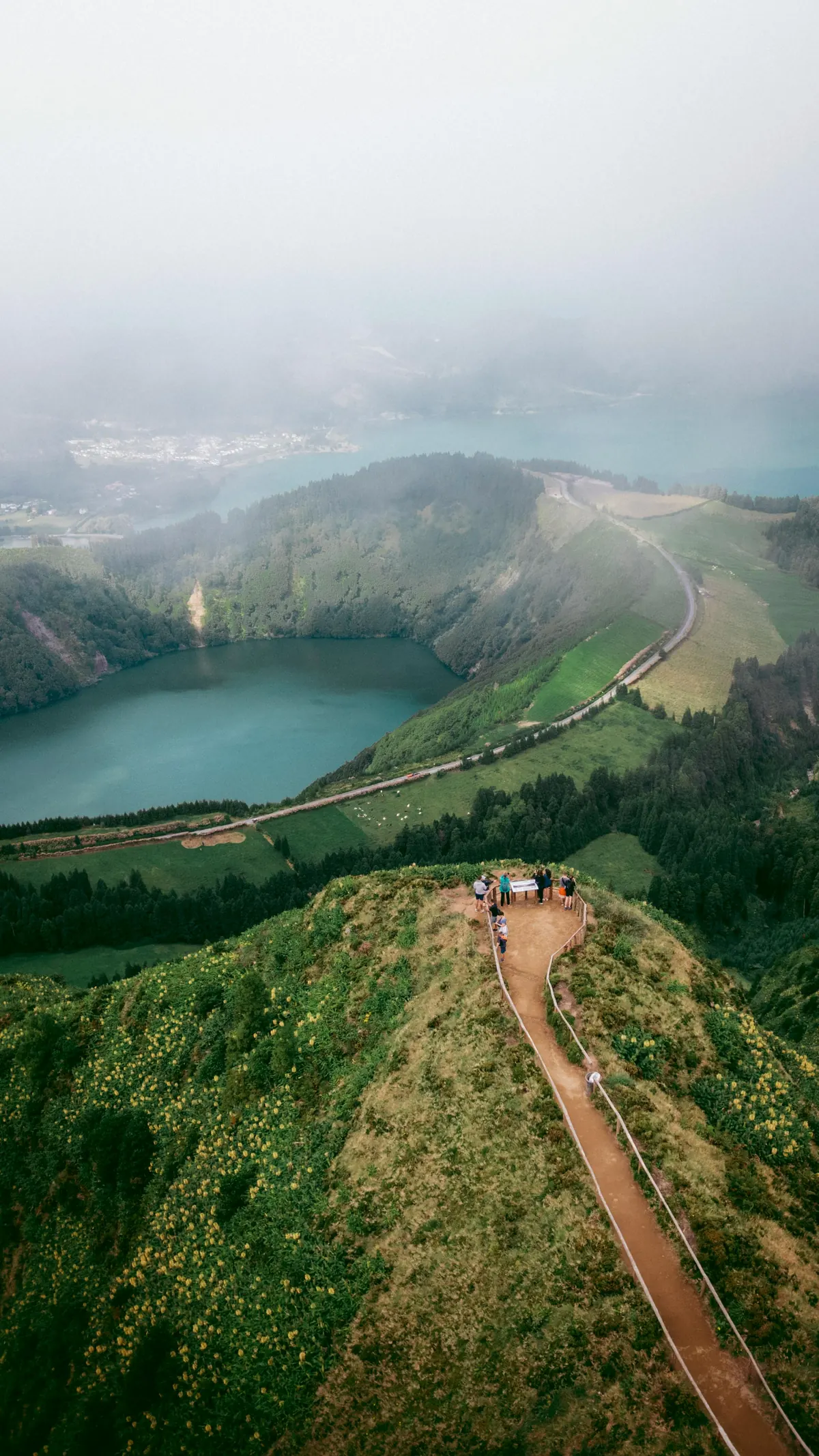
In Furnas, that means somatic movement and yoga with Carolina Lino, and long stretches on foot through raw volcanic landscape: crater ridges, forest paths, the steaming floor of the valley. Jorge Valerio’s handpan, played outdoors, belongs to the same idea — a bridge between physical regulation and stillness. The shape of each day is tailored to the cohort, but the principle holds: the question goes out on foot before it comes back to the table.
No cameras. No audience. Just the path, and somewhere green.