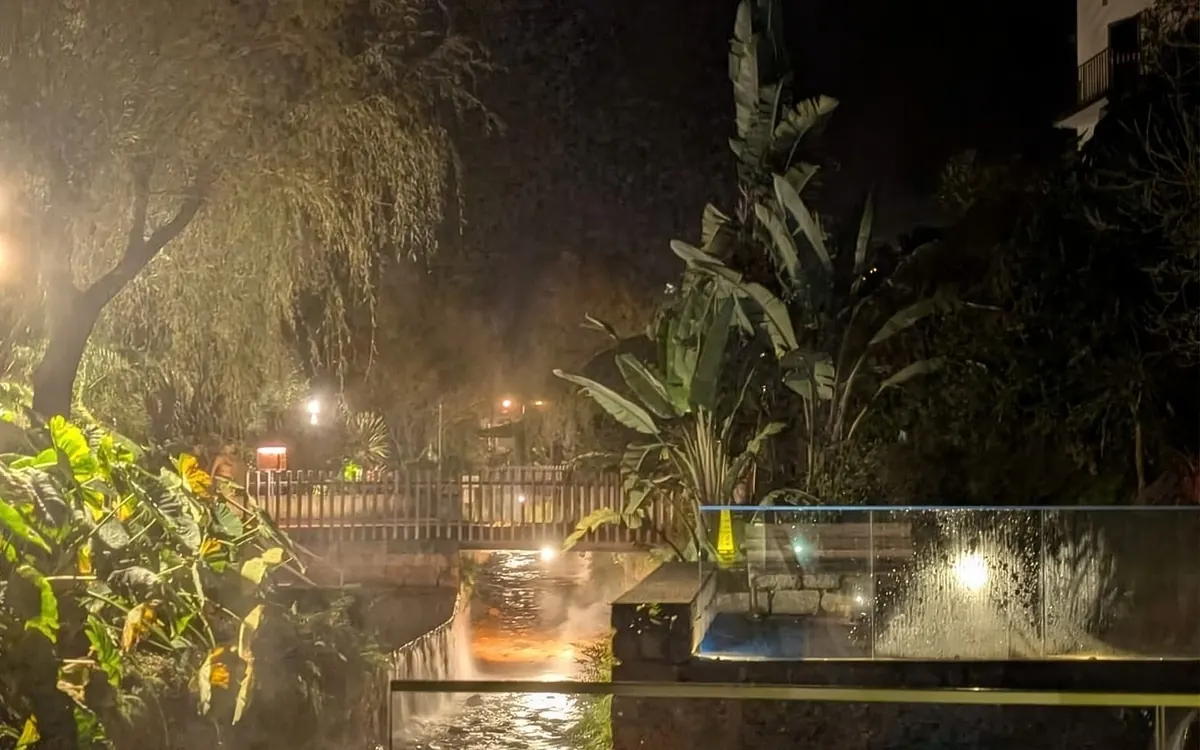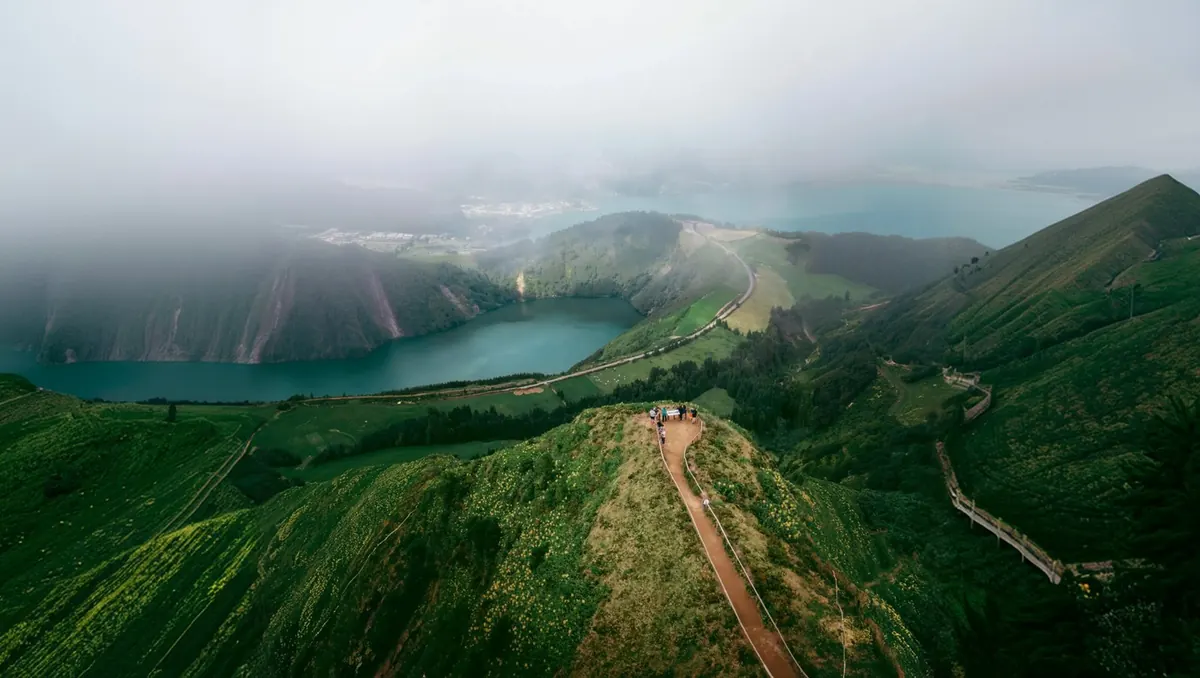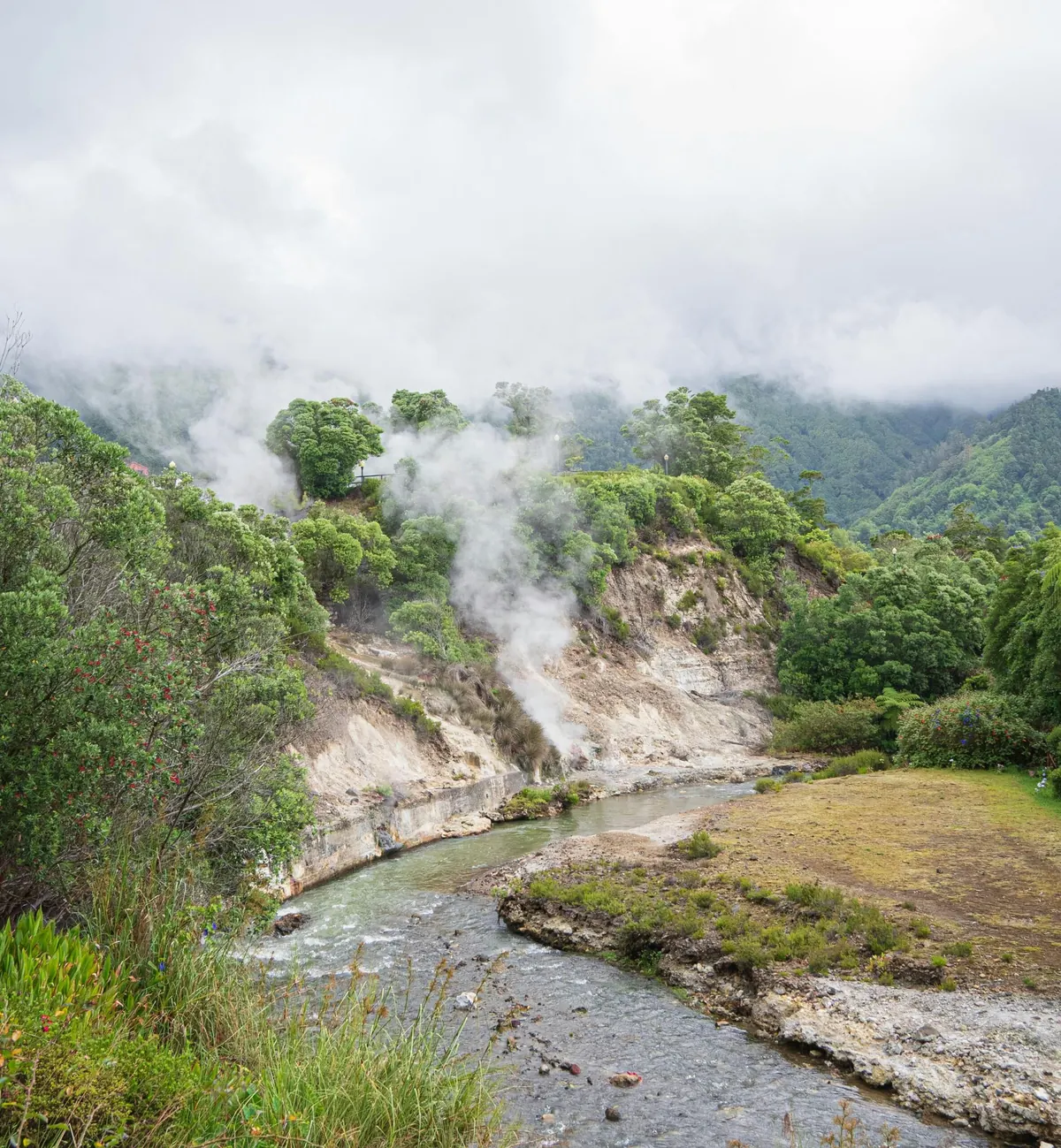
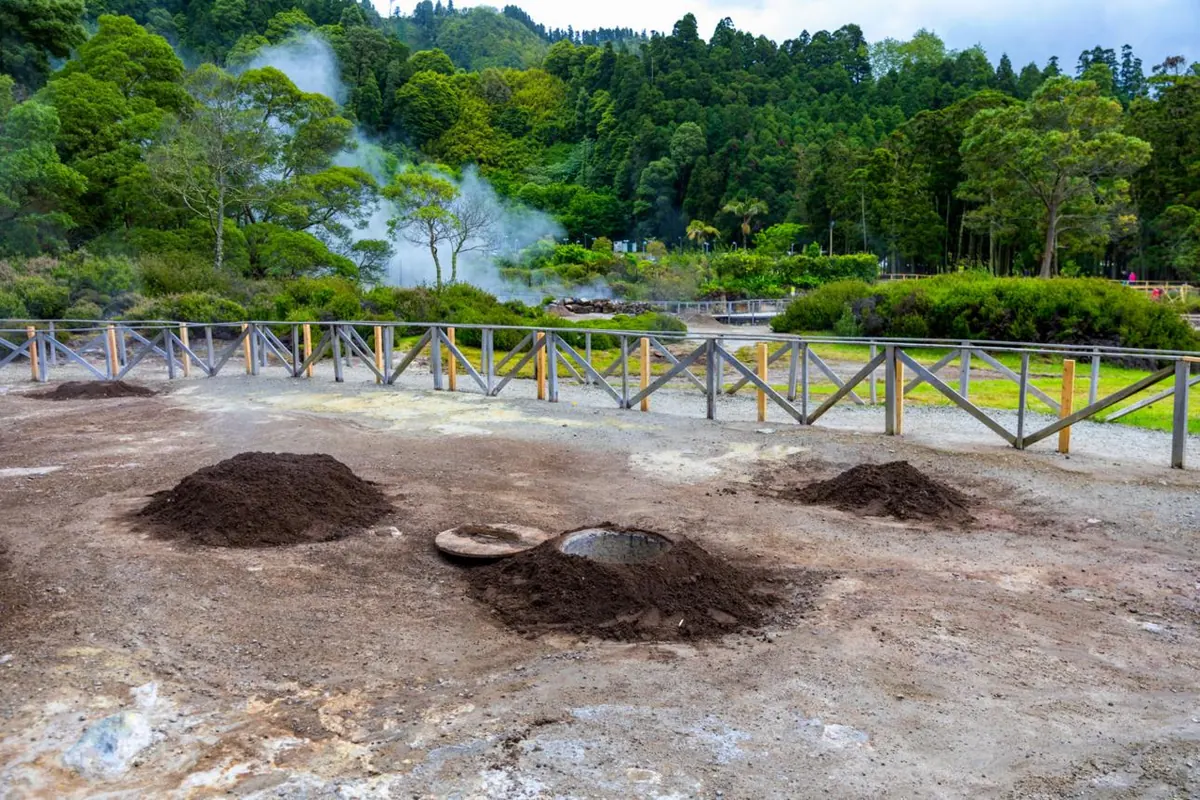
At the edge of the lake in Furnas, the ground is warm. Steam finds its way up through the soil. The earth here is hot enough to cook in — and so, for centuries, people have.
This is where cozido das Furnas begins. Pots are lowered into the geothermal ground and covered over. Then, for about six hours, nothing happens that anyone can see. No chef. No kitchen. No flame. The earth does the cooking. Cozido das Furnas was a ritual before it became a meal.
It is hard to describe to anyone who has not sat down to it. Not because of the taste, but because of what the waiting does to everyone around the table.
You cannot rush the ground. You can only wait for it.
Pressure, and patience
What strikes people the first time is how little there is to do. There is no stirring, no tasting, no turning up the heat. Once the pot goes into the ground, the decision has been made. Everything after that belongs to pressure, and to patience.
Cooked underground
Six hours of nothing anyone can see.
It is, we think, the best metaphor we have for the week. A hard decision rarely needs more heat. It needs the right pressure, held steadily, for long enough — and the discipline not to keep lifting the lid to check. Slow, under pressure, transformed by time: that is the cozido, and it is the reset.
Most founders and executives have built careers on intervention. Something drifts, so they adjust it. A number dips, so they act. It is a valuable instinct, and it is exactly the wrong one for the decision that has been circling for months. Some things only change once you stop touching them.
Eight people, one table
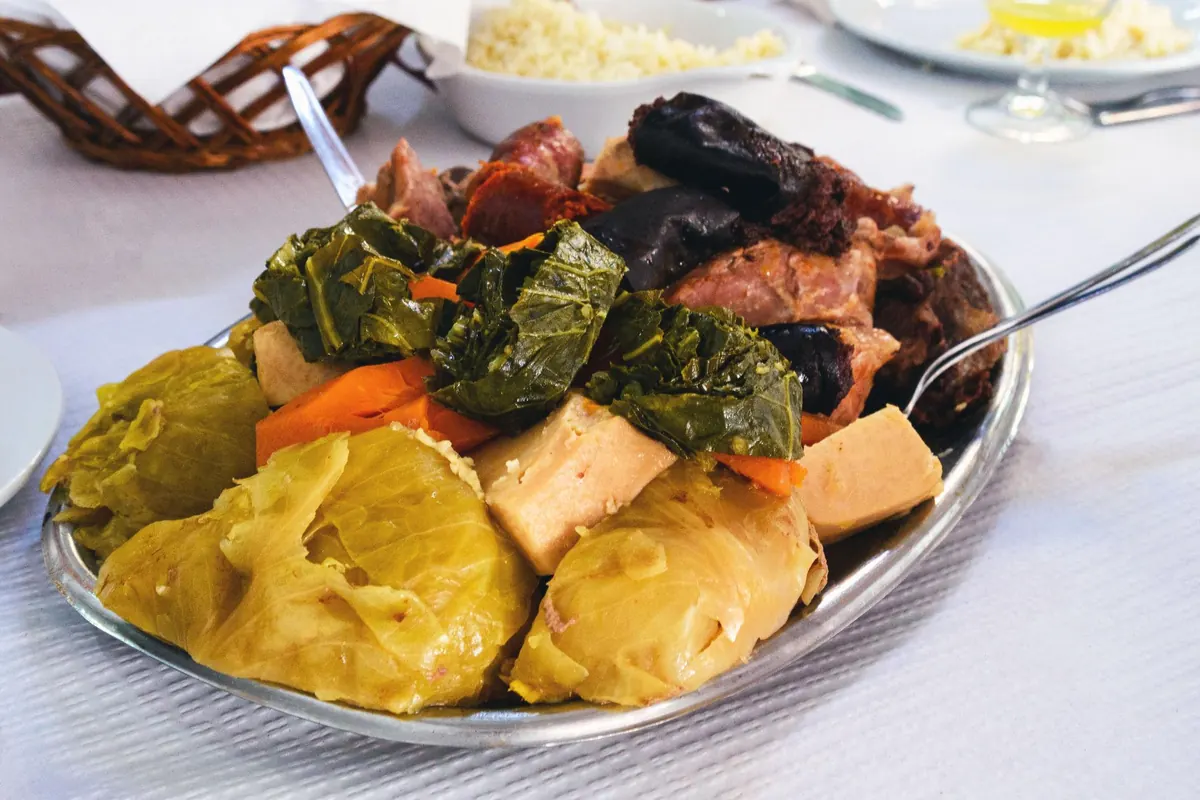
When the pot comes out of the ground, it comes to the table. Around it sit eight people who, by then, have earned the right to an honest conversation.
Nobody at that table is managing you. There is no board to perform for, no team reading your face for signals, no investor to reassure. That is rarer than it sounds. Why it matters is the subject of our note on the room you decide in.
A long meal does something a meeting cannot. Nobody has slides. Nobody leaves early for another call. The pace is set by the food, not the agenda — and sooner or later, the quietest person at the table is heard.
The food helps. It is hard to posture over a shared pot. Conversation slows to the speed of the meal; sentences get longer, answers less rehearsed. Somewhere between the first plate and the last, the talk stops being polite and starts being useful.
Nothing leaves the table
In Furnas, the cozido is not a dinner on an itinerary. It anchors the third lever of the method: connect. In the shape of a typical week — every cohort is tailored — the table comes once breath and movement have done their work.
The rules of the room are simple. No cameras. No audience. No record. What is said at the table stays at the table, because a table that might be repeated is a table where people choose their words.
So we will not tell you what gets said there. That is rather the point. We will only ask: when did you last sit at a table where nothing was in a hurry — not the food, not the people, not the questions?