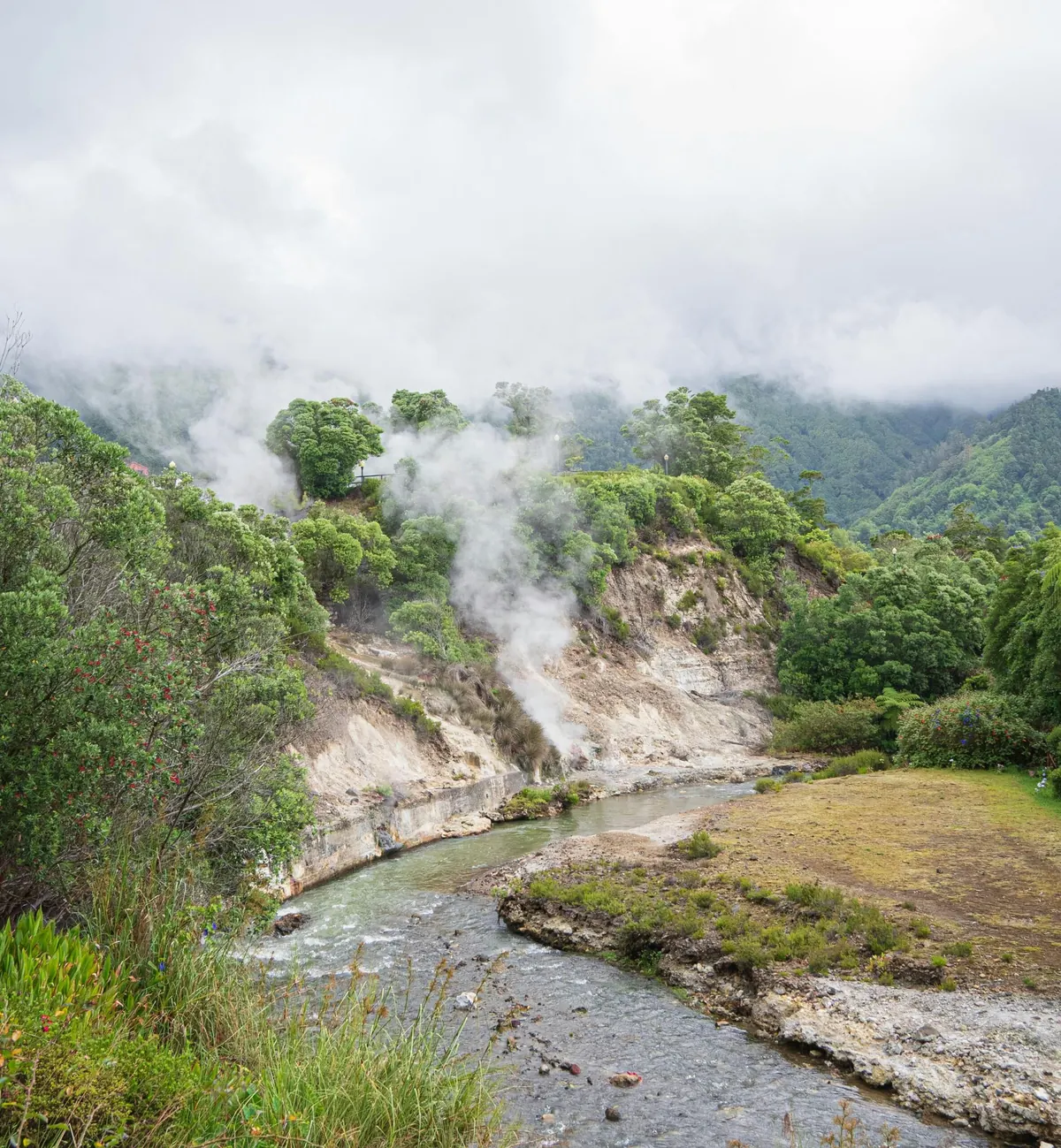

Stop scrolling and turn your sound on. It is how we captioned a short film of the waterfall at Lombadas, on São Miguel, because the picture was only ever half of it.
Most of the noise in a leader’s life is not loud. It is constant: the hum of an office, a phone vibrating against a desk, traffic beneath a hotel window, a notification you no longer consciously hear. None of it registers as stress. All of it asks for a little of your attention, all day.
We tend to treat sound as background — something that happens while the real work goes on. We think it is closer to a lever. What you listen to changes how you feel, and how you feel shapes what you decide.
Silence is not the opposite of noise. The right sound is.
What the research found
In 2021, a team led by Rachel Buxton published a review in PNAS that gathered the evidence on natural sound and health. They identified thirty-six publications on the subject, and combined the results of eighteen of them in a meta-analysis.

The overall picture was consistent. Natural sounds were linked to lower stress and annoyance, and to better health and more positive feelings. The benefits reported ranged from less pain to better mood and sharper performance on cognitive tasks.
Most of us know this without being told. A room above the sea feels different from a room above a road, long before we have put a name to why. The research puts numbers to what the body notices first.
Then the researchers compared kinds of natural sound, and two stood out.
- Water
- The largest effect on health and positive feelings.
- Birdsong
- The most effective at easing stress and annoyance.
It is a young field, and some of those comparisons rest on only a handful of studies. But the direction is clear, and it will not surprise anyone who has stood beside a waterfall and noticed that, for a few minutes, nothing else was asking for their attention.
Sound in the week
In the shape of a typical day — every cohort is tailored — sound is how the day travels from the body to stillness.
You can shut your eyes; you cannot shut your ears. Sound reaches you whether or not you are paying attention, and that is exactly what makes it useful once the body has settled. It gives a busy mind something to rest on that asks for nothing back.
Breathwork and cold regulate the body. Jorge Valerio’s work picks up from there. He works with handpan, movement and sound in nature, outdoors in the landscape, to help people transition out of mental noise. We think of his sessions as the bridge between physical regulation and real stillness: the moment the body has settled and the mind has not yet caught up.
Each day’s programme closes with Nuno Amendoeira, who has worked with Tibetan singing bowls and other instruments since 2005. His sound bath is a space to pause, release and return to yourself.
There is early research on that, too. In a 2017 observational study, Tamara Goldsby and colleagues at the University of California, San Diego asked sixty-two adults how they felt before and after a singing-bowl meditation. Afterwards, participants reported significantly less tension, anger, fatigue and depressed mood — and those new to the practice reported the largest drop in tension. With no comparison group, it tells us how people felt rather than proving why.
Between the sessions, the valley supplies its own sound. Thermal water moving through the forest. Steam rising from the ground. The forest around the cabins at night, and the earth below. Over five days, it becomes the loudest thing in your week — and the noise you left behind begins to sound like what it is.
None of this asks you to believe anything. It asks you to listen. The protocol below takes ten minutes, and this page will keep time for you.